


Defense or Debt? Zelensky’s EU Tour and the Rising Cost of War
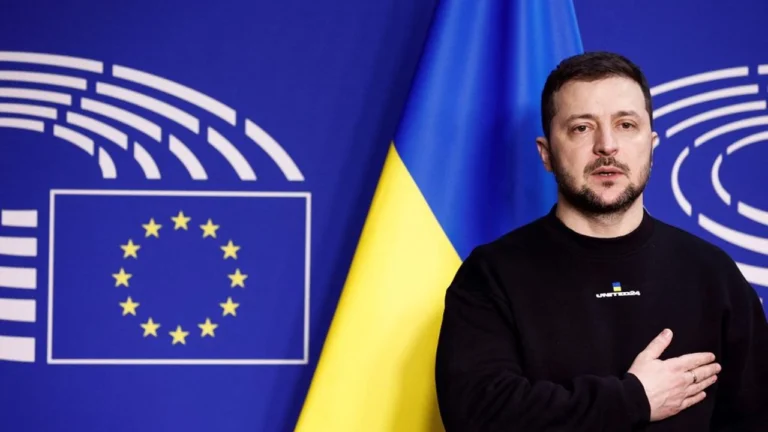
Ukraine’s president Volodymyr Zelensky poses as he arrives for a summit at EU parliament in Brussels, on February 9, 2023. – Ukraine’s President is set to attend an EU summit in Brussels on February 9, 2023, as the guest of honour where he will press allies to deliver fighter jets “as soon as possible” in the war against Russia. (Photo by Kenzo TRIBOUILLARD / AFP)
November 19, 2025 Hour: 7:40 pm
🔗 Comparte este artículo
An agreement for 100 Rafale fighter jets marks a structural change in Ukraine’s military architecture. It replaces Ukraine’s dependency on Russian-designed systems with a new dependency on French industry, primarily Dassault Aviation.
The EU support for Ukraine began as a moral imperative characterized by rapid solidarity. But this year, it had changed into a financial engineering and a long-term militarization.
The tour by Ukrainian President Zelensky across France, Spain, and Türkiye was less a diplomatic celebration. It was more a desperate race to secure weapons, money, and energy before another winter of war.
Instead of opening doors to peace, this tour underlined how Europe is locking its own citizens to pay the costs of the war.
From moral duty to financial engineering
In the first months of the full-scale war, European leaders mark support for Ukraine as an ethical and historical obligation.
Emergency decisions, sanctions, and financial packages aimed to stop Russian aggression. And defend principles of sovereignty and international law.
That phase is now over. What remains is a complex mix of long-term military contracts, budget mechanisms, and a growing reliance on public debt to sustain the war.
Zelensky’s recent tour evidence this transformation. Instead of symbolic visits, the agenda was on weapons systems, multi-year financing, and industrial cooperation.
The core question is no longer whether Europe supports Ukraine, but on what terms and at whose expense. The answer so far goes to a deeper integration of Ukraine into Western defense markets and a heavier packs placed on European citizens.
The French lock-in: Rafale and dependency
The agreement between Zelensky and French President Macron for the assets of 100 Rafale fighter jets is a step to modernize Ukraine’s air force. In practice, it represents a structural shift in Ukraine’s military architecture and a major victory for French industry.
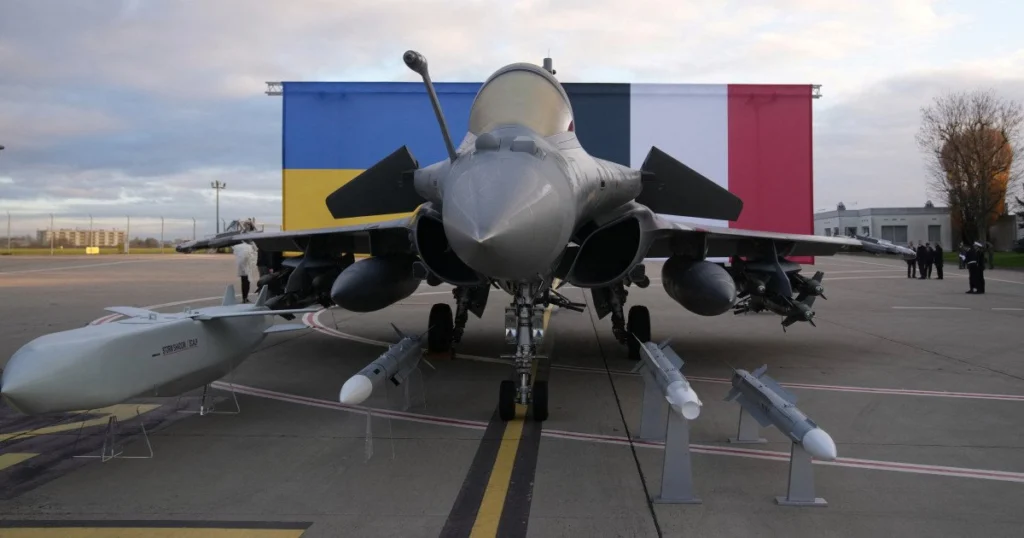
This is not an upgrade from Soviet-era platforms to NATO-compatible systems. It is a change of dependency.
Instead of relying on Russian-designed and spare parts from Eastern Europe. Ukraine will now depend on the production, political decisions, and rules of Dassault Aviation. Macron’s narrative of “rebuilding” Ukrainian defense hides a deeper trend: the privatization of security.
The corporate contracts, and offset arrangements are going to mediate what was a sovereign function. In this model, Ukraine’s survival long-term revenue for Western defense firms, and any ceasefire that reduces demand becomes a risk. Peace, in other words, clashes with the logic of permanent orders.
Spanish aid and the US military complex
In Spain, Zelensky secured another package, framed by Prime Minister Pedro Sánchez, Madrid expressed commitment to Ukraine and European security.
The €817 million sounds like solidarity, but the internal structure of the package exposes the contradictions. Most of the money is for military support rather than social or reconstruction needs.
Part of the aid is going through EU instruments such as the SAFE tool, designed to coordinate support and share costs between member states.
Another part consists of direct shipments or bilateral arrangements. The most politically significant component is the €100 million for NATO’s PURL, which allows European states to buy American weapons. Including systems like Patriot missiles, for Ukraine. Europe pays, US corporations deliver, and Ukraine becomes the testing ground.
This architecture has triggered strong criticism from the Spanish left. Leaders like Ione Belarra describe this as a “militaristic drift” in which Europe is a junior partner in a “colonial” distribution of roles.
Washington supplies weapons, UE assumes financial risks, and Ukraine absorbs the human cost. The critique is about European countries feeding the military-industrial complex that wins in endless conflict.
Operation Midas and the crisis of trust
While Zelensky was asking for new billions, the “Operation Midas” scandal exploded in Kyiv, striking at Ukraine’s credibility.
The National Anti-Corruption Bureau uncovered an alleged scheme of more than $100 million within Energoatom, the state nuclear energy giant. The scandal is especially shocking given the ongoing Russian attacks on Ukraine’s energy infrastructure and the blackouts endured by millions of civilians.
The involvement of figures linked to Zelenskyy’s inner circle, including close associates accused of acting as behind-the-scenes power brokers, turns this from a simple case of fraud into a systemic warning sign.
It reinforces a long-standing fear in European capitals: that weapons and funds destined for survival and reconstruction might be captured by networks of oligarchs, intermediaries, and corrupt officials.
The message from leaders like Macron is becoming clearer: future aid, especially military support, will be tied to strict conditions and “deep reforms” in the rule of law, transparency, and corporate governance.
For Ukraine, this double pressure is dangerous. On the one hand, the country depends on external financing to sustain its budget, maintain basic services, and keep fighting.
The Bill for Europe: Mortgaging the Future
The most alarming development for European citizens is the sheer scale of the financial liability being constructed. The EU is currently finalizing its support framework for 2026–2027, and the numbers are staggering.
Brussels faces a dilemma. The preferred option, using interest from frozen Russian assets, is legally fraught. Consequently, the European Commission has drafted a “Plan B”: a direct grant to Ukraine that could reach €90 billion.
Combined with the €50 billion “Ukraine Facility” and recent bond issuances, the EU is effectively mortgaging its own budget.
The massive use of public wealth for the war effort risks funds for social services and infrastructure within member states. Raising the question of how long European voters will accept the cost.
A Conflict in Deadlock
Zelensky’s stay in Spain was finalized with a symbolic visit to Picasso’s Guernica in Madrid, a piece that represents the suffering of war. Still, the agreements signed in Paris and Madrid says they are not moving to peace, but toward institutionalized conflict.
With 100 new jets planned and European funds going to American arms, the strategy has shifted to permanent sustainment. But, this “systemic response” rests on the ground of Kyiv’s governance and the deepening financial exposure of the European Union.
The Open Question: Will the Kremlin Resume Dialogue?
Despite Zelensky’s efforts to “reactivate negotiations” during his stop in Turkey, the chances of a step forward remain bleak. The Ukrainian president hoped to leverage Turkish mediation and American pressure to force a “just peace”.
However, the Kremlin’s response has been dismissive. Moscow refused to send representatives to the Turkey talks. Kremlin spokesperson Dmitry Peskov issued a warning, the new weapons deals “will not change the course of the war”. Ukraine will eventually have to negotiate from a “much worse position.”
For now, the diplomatic track remains frozen, leaving the battlefield and the European budget to bear the burden.
Author: Silvana Solano
Source: teleSUR / France24 / Al Jazeera / RT / EFE / SWI